Hire from a ranked list,
not a pile of CVs.
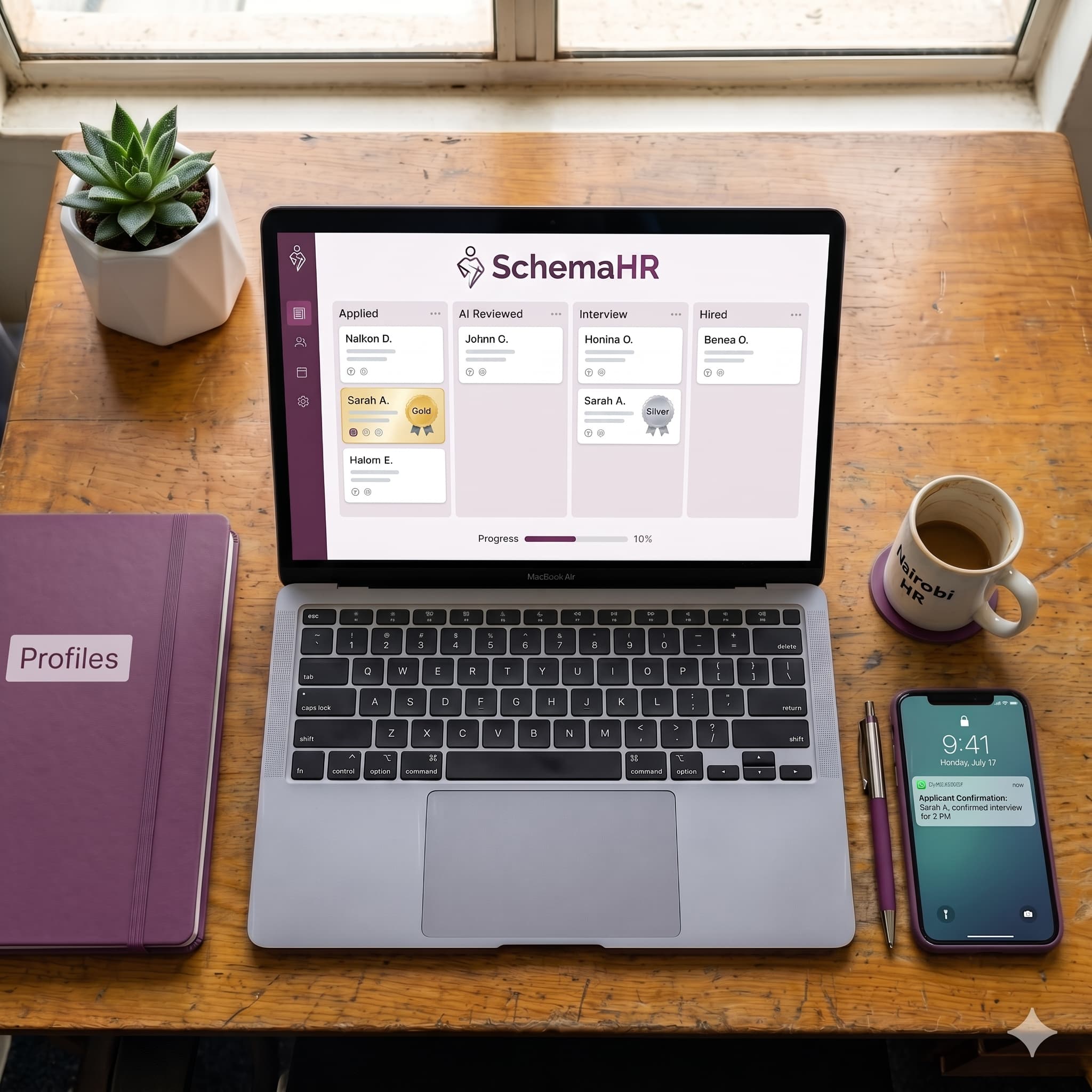
SchemaHR reads every application against the job, ranks the candidates and explains each score. Your team takes it from there: shortlist, interviews, documents and the offer, with candidates kept up to date by email and WhatsApp.
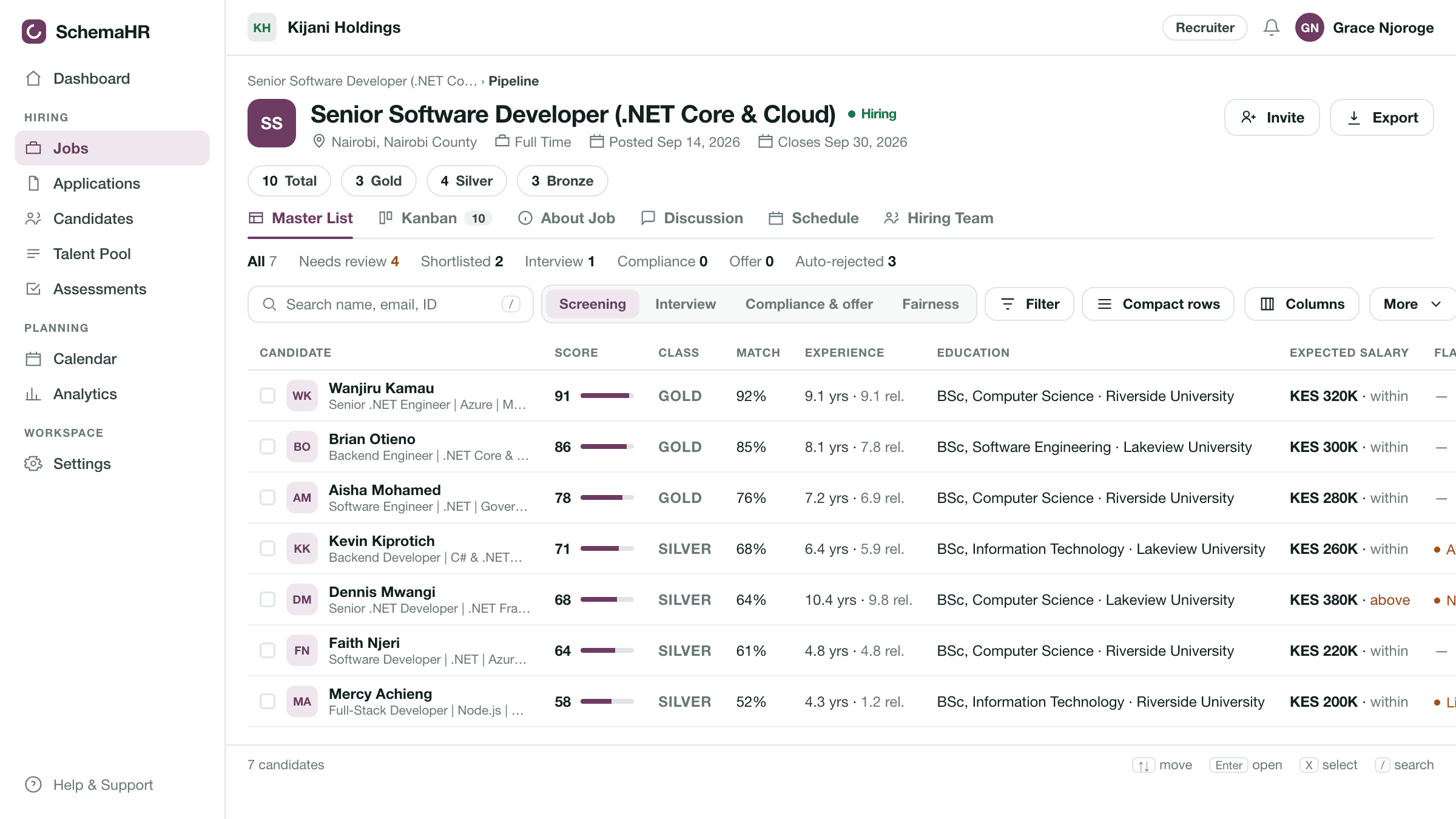
Sample data. Candidates and company are fictional.
21 days
Before uploaded CVs are deleted
No login
For candidates to confirm interviews or upload documents
Every move
Logged with who made it and when
Unlimited
Recruiter seats on every plan
The problem
Slow hiring costs you the best people.
Most hiring in Kenya still runs on email, spreadsheets and WhatsApp threads. It works, until a role gets 400 applications.
The best candidates go first
Reading a few hundred CVs by hand takes days. By the time the shortlist is ready, the strongest applicants have often taken another offer.
Screening eats the week
Most of a recruiter's time goes on sorting applications, not on talking to the people worth hiring.
Documents arrive in pieces
KRA PIN, good conduct certificate, HELB clearance — chased over email, arriving late and incomplete, with nothing tidy to show an auditor.
SchemaHR was built around those three problems.
What it does
Everything from application to offer.
One system instead of an inbox, a spreadsheet and a WhatsApp group.
Screening
Candidates ranked against the job
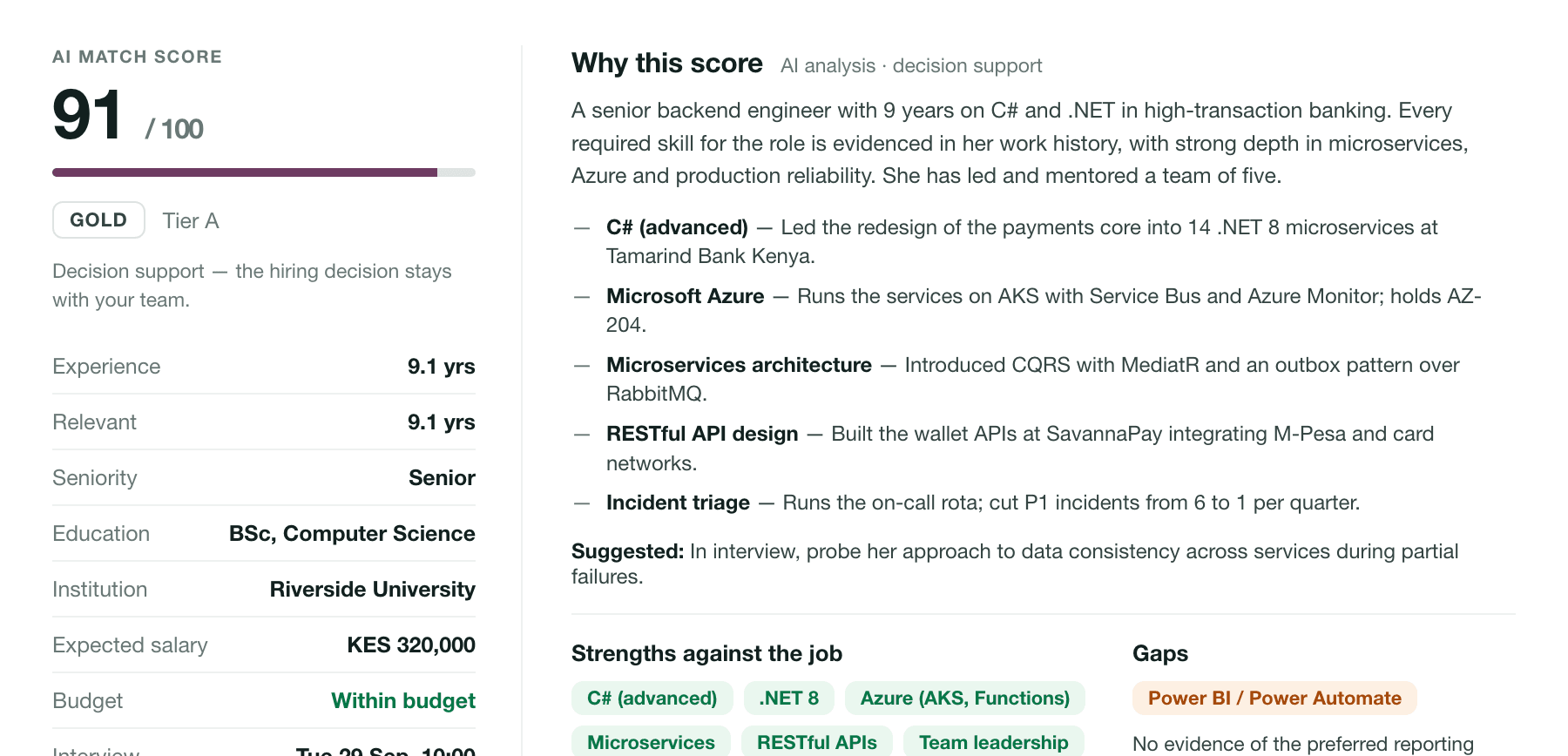
Each application is read against the role's requirements and scored. Every score comes with a written reason, so you can see why someone ranked where they did, and disagree with it.
- A written reason behind every score
- Strengths and gaps against your requirements
- Flags for anything that needs a closer look
Pipeline
One pipeline, start to finish
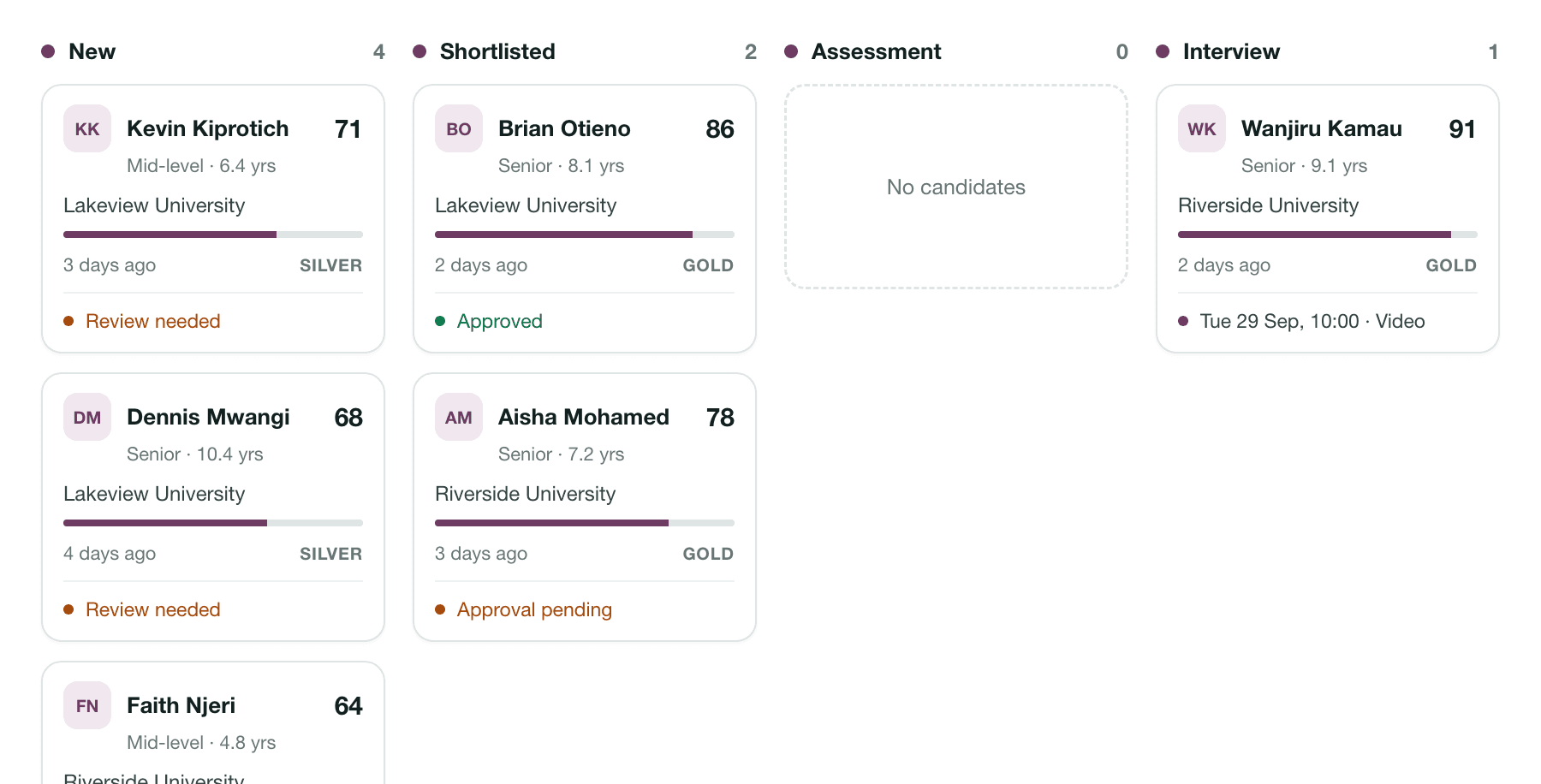
Move candidates from application to shortlist, interview, documents and offer on one board. Nothing moves forward without a person deciding it should.
- Shortlists need sign-off before anyone is invited
- Candidates confirm interviews from a link, no login
- Every move logged with who made it and when
Compliance
Documents and ID checks
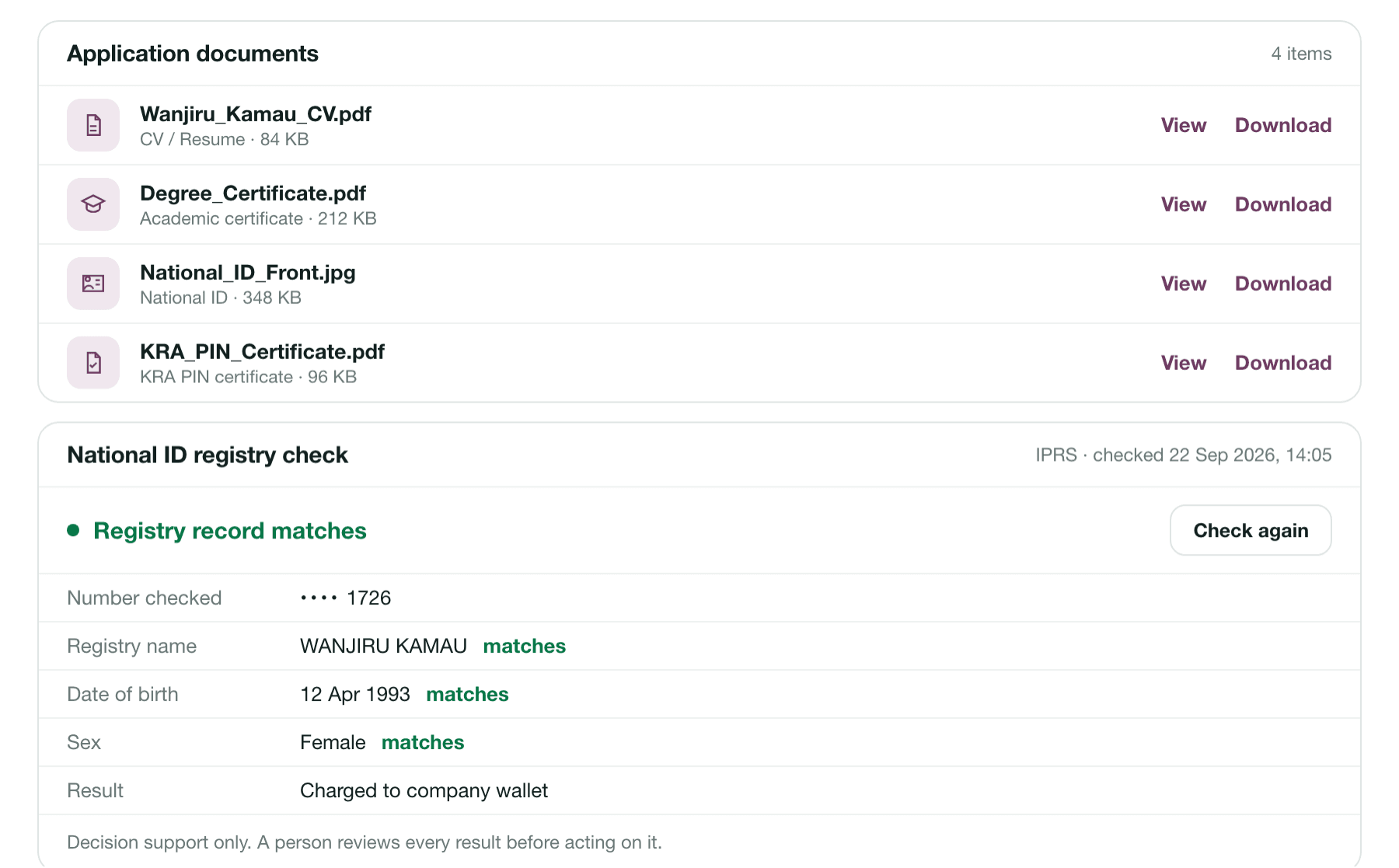
Ask for the National ID, KRA PIN, good conduct certificate, HELB clearance and the rest in one request. When you need more certainty, check a candidate's ID number against the national registry in one click.
- One upload link for everything you ask for
- Uploads checked for completeness and matching names
- National ID checked against IPRS, paid per check
Candidates kept in the loop
Interview invites, document requests and offers go out by email, and by WhatsApp if you switch it on.
Candidate data handled properly
Uploaded CVs are deleted 21 days after processing, or on the schedule your policy sets. The AI provider does not train on your data.
Your own talent pool
Strong runners-up stay searchable after a role closes, so you can look there before you advertise the next one.
Before and after
The same hiring, without the chasing.
You keep your process. SchemaHR takes the sorting, reminding and chasing off your team.

Days spent reading CVs for every role
A ranked list minutes after applications arrive
Candidates left waiting because follow-up is manual
Updates sent by email and WhatsApp at each stage
Documents chased over email, and ID numbers taken on trust
One upload link, and ID numbers checked with IPRS
Candidate data spread across inboxes and spreadsheets
One pipeline, with every move logged
Strong candidates lost while the review drags on
Your best applicants shortlisted the same day
No clear answer when IT asks where candidate data goes
A written answer: where it's processed, and deleted after 21 days
Want to see it with one of your own roles? A demo takes about 30 minutes.
Book a Demo
For larger teams
Built for teams with a process to follow.
Panels, approvals and audits.
Larger organisations and public bodies hire through panels, sign-offs and audits. SchemaHR records each step as it happens, so the paperwork is done when the hire is.
Your own careers page
Jobs appear at yourcompany.schemahr.com with your logo and colours. Candidates read the role and apply without leaving your brand.
Shortlist sign-off
A shortlist needs approval before anyone is invited to interview. Export the approval sheet for the panel and import it back once it's signed.
Structured interviews
Each panel member scores candidates against the same competencies, and can't see colleagues' scores until they've submitted their own. Live video interviews are built in.
Reports for audit
An application register, stage history, a record of automated decisions and a fairness breakdown by gender and region, all exportable to Excel.
People make the decisions
The AI suggests a ranking; it never moves a candidate on its own judgement. Any automatic rejection can be reversed, and the reversal is recorded.
No per-seat pricing
Add every recruiter, hiring manager and interviewer you need. You pay for applications, not logins.
Hiring at volume, or in the public sector?
We'll take you through how candidate data is handled, contract terms and invoicing.
See it working on a real job.
Book a 30-minute walkthrough of screening, the pipeline and document collection, with one of your own roles.